


Dispute volume is the metric most financial institutions watch. It is a reasonable place to start, but it misses a more consequential pattern hiding just beneath the surface: what happens to customers who begin a dispute and do not finish it.
Quavo’s platform processes over one million disputes every month across a range of financial institutions. That scale gives us a unique view into filing behavior that most individual institutions cannot see on their own. And one trend in particular stands out as both underappreciated and highly actionable for operations and finance leaders.
What the Data Reveals
In an analysis of 293,416 customers filing disputes between January 2025 and May 2026, customers who had previously abandoned a claim were 2 times more likely to file future disputes compared to customers with no prior abandonment. Of those returning filers, 35% went on to file two or more additional claims, averaging 1.86 disputes per returner.

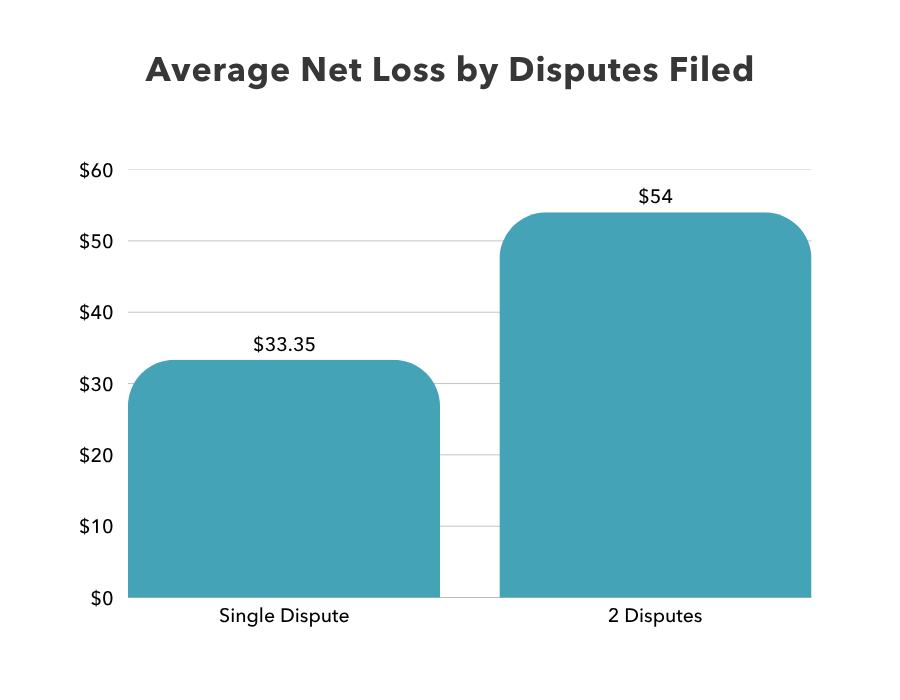
This is the serial filer pattern, and the loss profile that follows is striking. For context, a customer who files a single dispute and has no prior abandonment history carries an average net loss of $33.35. A customer who returns and files just two claims drives average net loss to $54, which is a 62% increase over the baseline.
That escalation is not linear, however. It concentrates in a segment of repeat, high-frequency filers whose behavior, once established, compounds quickly.
Online Banking drives the most abandonment, but the bigger issue is repeat frustration. While 63.1% of customers abandon, each leaves behind an average of 3.7 incomplete claims, which is the highest across all channels.
This suggests customers are not casually dropping off. They are likely trying multiple times, getting stuck, and coming back later. In contrast, customers who call in abandon far less, confirming that agent-assisted channels capture more motivated customers.
The bigger routing concern is what happens next: of the customers who abandon in Online Banking, 67% never file at all. Only 11.5% eventually move to an agent channel, most often through the Contact Center.
This creates two business risks: lost claims from customers with unresolved disputes, and avoidable call volume from customers who could have completed digitally with a clearer, more guided intake experience.
Five Practices That Change the Outcome
The serial filer pattern is not inevitable. Institutions that have invested in dispute intake quality, not just dispute processing speed, see meaningfully different outcomes. Here is what that looks like in practice.
Use behavioral history to personalize the intake experience. Returning filers are not the same as first-time filers. Institutions with mature dispute platforms use prior filing behavior as a signal to shape the intake experience by surfacing additional context, offering agent-assisted paths, and reducing the drop-off points that drive abandonment in the first place. This is not about treating customers with suspicion. It is about giving them a better path to resolution on the second interaction than they had on the first.
Match channel to claim complexity. High-volume digital channels are well suited to straightforward disputes. More complex claim types, like those involving recurring billing, high-dollar transactions, or account-level patterns that suggest broader fraud, benefit from a guided interaction. Routing these to a phone call at the point of intake ensures complete information is captured on the first touch, and unnecessary disputes are mitigated. The best institutions are deliberate about which dispute reasons belong in self-service and which ones do not.
Resolve potential disputes before they are filed. The most efficient dispute is the one that never enters the queue. Intake experiences that proactively surface relevant transaction context, including prior purchase history with the merchant, delivery status and shipping confirmation for merchandise-related transactions, and real-time confirmation of any refunds already in progress, give accountholders the information they need to recognize a legitimate transaction or confirm that their issue is already being handled. This kind of proactive context at the point of intake is one of the highest-return investments an institution can make in its dispute operation.
Track dispute prevention as a performance metric. Most dispute operations teams measure what happens after a claim is submitted, but few measure what happens before. Adding dispute prevention as a tracked metric that measures how many potential disputes were resolved prior to submission can give leadership a cleaner view of where the operation is creating value and where friction is still pushing customers toward a refile. It also creates a direct ROI signal for intake investments.
Build automation that handles complexity, not just volume. Automation in dispute management is not new. But there is a meaningful difference between automation that handles simple, well-defined claim types and automation that is trained on millions of dispute data points and built to handle edge cases, exceptions, and the full range of claim complexity. Institutions that operate at the latter level are better positioned to absorb volume growth without proportional cost increases, and better equipped to catch the patterns that distinguish high-risk serial filer behavior from routine disputing.
What This Means for Your Loss Exposure
For those evaluating their dispute operations, the serial filer data points to a specific and addressable opportunity. Loss per customer does not grow gradually as filing frequency increases. It jumps. A customer who goes from one claim to two already costs 62% more than your baseline single filer. By the time that customer reaches the highest-frequency cohort, the per-customer loss is nearly 39 times what you would see from a customer who filed once and moved on.
That segment is traceable and, to a meaningful degree, interruptible. Institutions that address intake quality in the online channel and invest in proactive transaction context at the point of submission are working on the right part of the problem. The return is not just lower loss. It is a more defensible compliance posture, faster resolution timelines, and a better accountholder experience at one of the moments that matters most to customer trust.
Dispute management has long been treated as a cost center. The data makes a case for a different frame: it is a recoverable revenue opportunity, a compliance differentiator, and a measurable driver of accountholder retention for institutions willing to look at the full picture.
Quavo Fraud & Disputes | quavo.com | Data sourced from Quavo’s fraud and dispute platform | Analysis period: Jan 2025–May 2026: 293,416 customers
