

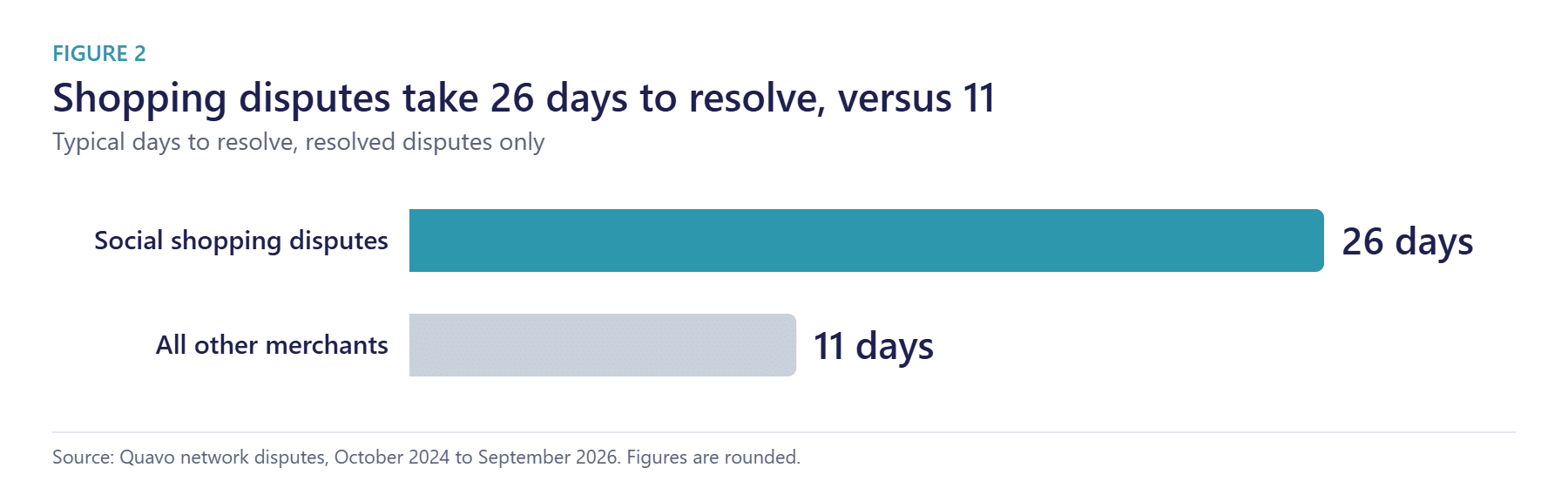
The fastest-growing type of dispute on social media platforms is not a scam or a fraud ring. It comes from people buying products inside social media apps, and those disputes take more than twice as long to resolve as a typical card dispute.
Quavo processes disputes for more than 650 issuers and brands. Over the past two years, that network handled about 1.1 million disputes tied to social platforms, meaning social networks, video and creator apps, and everything sold through them, from ads and subscriptions to in-app purchases and peer-to-peer payments. Monthly dispute volume has remained steady at 45,000 to 60,000 cases, even as overall dispute volume across the network has grown. But that stability masks a shift: one type of dispute is becoming increasingly common.
Social shopping disputes have more than doubled
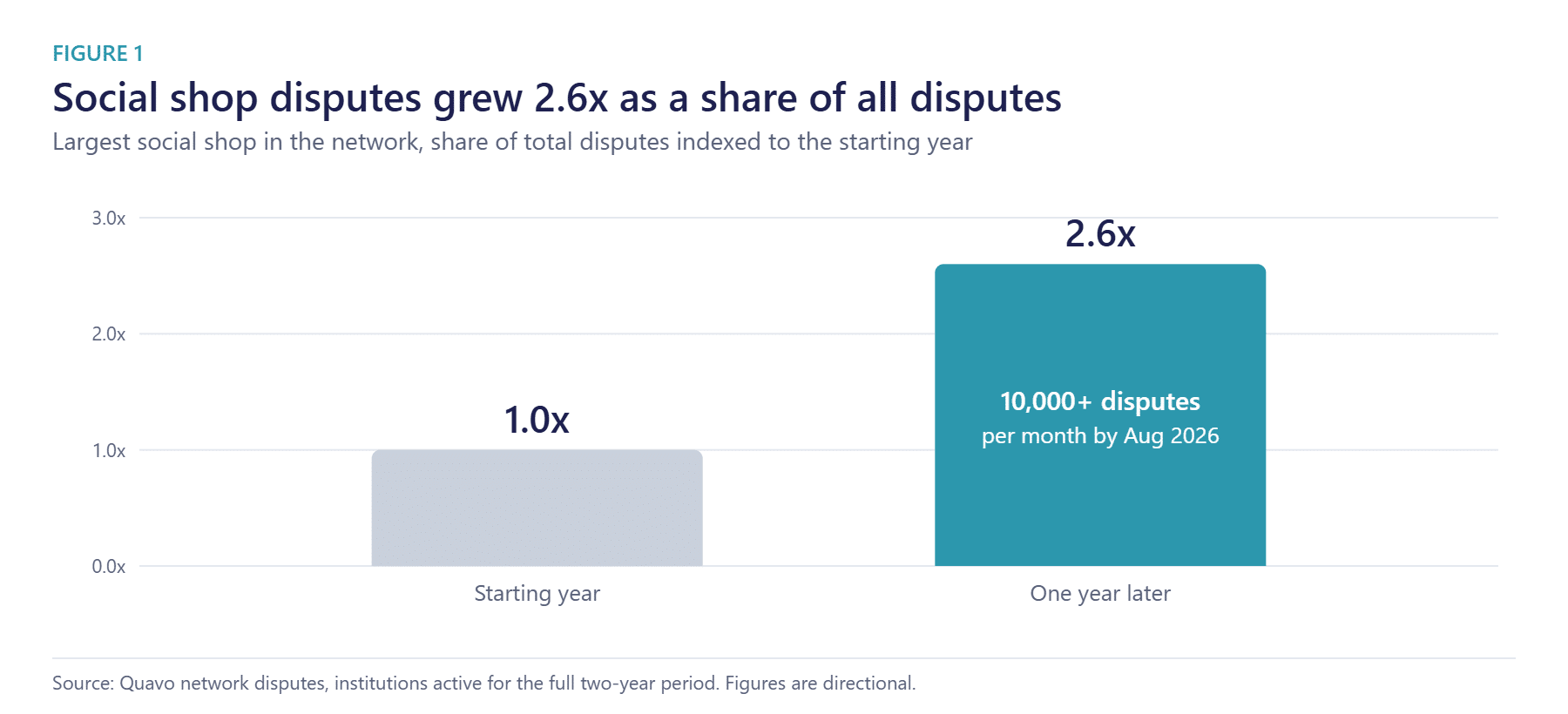
Looking at institutions active in our network for the full two-year period, disputes from one major video platform’s in-app shop, the largest social shop in our data, grew 2.6 times as a share of all disputes in just one year. By August 2026, they exceeded 10,000 disputes per month, with every institution seeing an increase. As platforms introduce AI shopping assistants and expand in-app checkout, and with the holidays approaching, that growth is likely to continue.
Four reasons these disputes are harder
Most social platform disputes, including ad charges, peer-to-peer payments, and in-app currency, are straightforward fraud claims that typically resolve faster than average. Shopping disputes are different in four key ways.
They take much longer. The typical shopping dispute takes 26 days to resolve, compared with 11 days for disputes at all other merchants in the network.
The dollars are real. The typical disputed amount is about $25. These are not $1 in-app purchases that cost more to work than to write off.
The claim often doesn’t fit the purchase. About 85% of these disputes are filed as fraud, even when the cardholder still has their card. In reality, the cardholder doesn’t recognize the merchant name or never received their order, so they select “fraud” when filing a claim.
The merchant fights back. The video platform fights about three in four chargebacks, making its shopping disputes three times more likely to see a representment than disputes at other merchants. When a cardholder files a fraud claim for a purchase they actually made, the merchant often has the evidence to win.
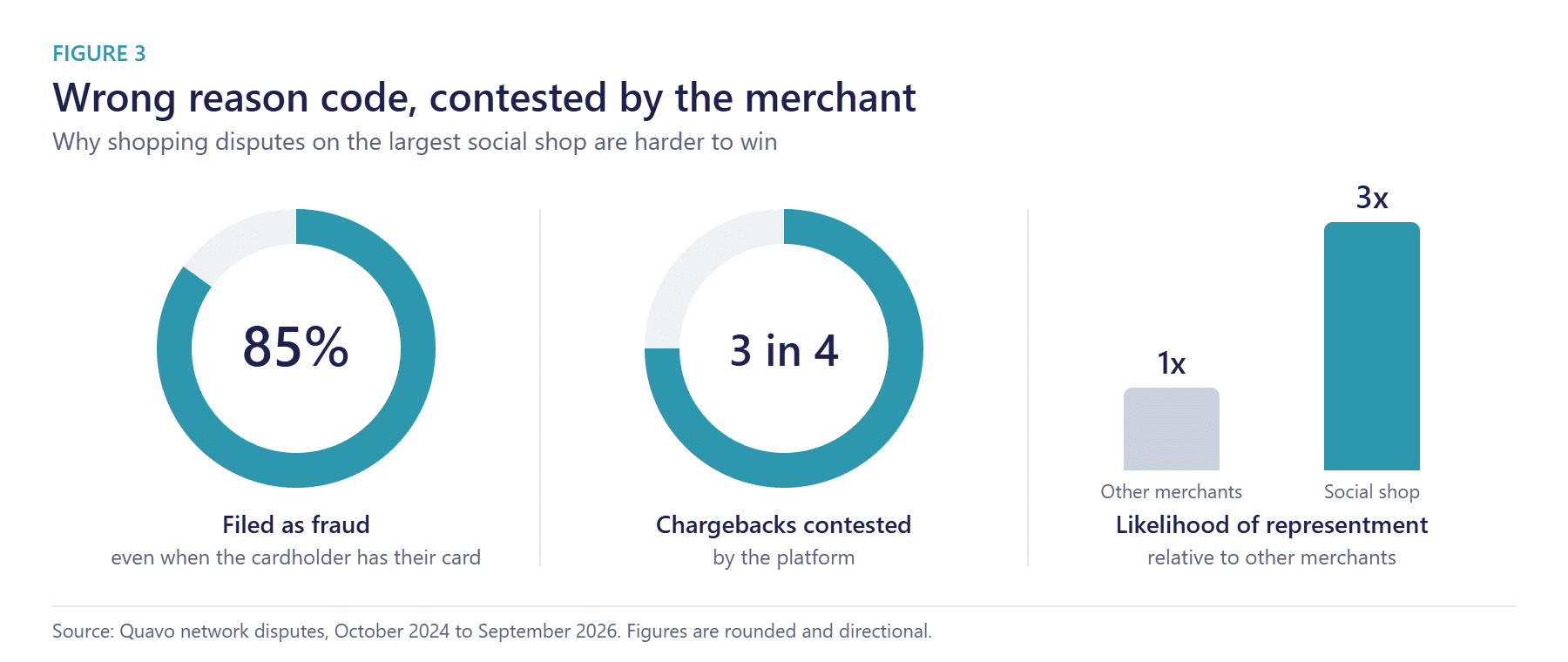
In short, these claims are often filed under the wrong reason, with too little evidence, against a merchant that contests almost everything.
Five rules to put in place now
- Show cardholders what they bought before they file. Many shopping purchases appear on statements under the platform’s name rather than the seller’s. At intake, surface the transaction details: the seller’s name and any other merchant names the purchase may appear under, a description of what was bought, the order and tracking numbers, and delivery status. A cardholder who recognizes the order is far less likely to call it fraud, and a claim that does move forward starts with the evidence it needs to withstand a representment.
- Ask about the purchase before accepting “fraud.” When those details are not available, ask whether the cardholder has bought from the platform before, whether the shipping address is theirs and whether they received an order confirmation. A yes usually means a merchant dispute, and filing it correctly the first time is what wins it. These questions must never delay temporary credit or required regulatory timelines.
- Send likely misuse cases to review. Route a claim to an investigator when the cardholder has undisputed purchases on the same platform in the past 90 days, or has filed more than one shopping dispute in that time.
- Set write-off limits by purchase type, not by platform. Many teams write off smaller disputes because they cost more to investigate than they’re worth. But using the same dollar threshold across an entire platform overlooks important differences. A $1 in-app currency purchase may not be worth pursuing, while a $25 shopping dispute could be. Issuers recover about 48% of disputed dollars on merchandise claims, making those cases worth a closer look.
- Track three numbers monthly through the holidays: shopping disputes as a share of volume, typical days to resolve and the “item not received” rate. If any jumps, adjust staffing and rules before the January backlog.
Why the network sees it first
A 2.6-fold increase can look like noise inside one book but is unmistakable across 650. The same pattern is now emerging on smaller social storefronts, where “item not received” claims run at 11%. Those volumes are still too small for any single institution to notice, which is exactly the kind of early signal a network view catches.
Quavo is doing this work with issuers today, connecting merchant purchase data to dispute intake so cardholders see recognizable details and what they bought before they file.
Social shopping disputes come with different challenges, timelines, and merchant responses. Institutions that adjust their intake process now will be better prepared to handle these claims during the holidays, without adding unnecessary work for their teams.
About the data: Quavo network disputes, October 2024 to September 2026, across more than 650 issuers and brands. Platforms were identified by merchant name, so figures are directional. Growth uses institutions active for the full period, and resolution figures use resolved disputes. Figures are rounded; no institution-level data is shown.